Needle, Thread, and No Mercy: The Cutthroat World of Competitive Embroidery Is Coming for the Spotlight
Picture this: a convention hall in Columbus, Ohio, buzzing with the kind of nervous energy you'd expect at a chess championship or a regional poker tournament. Competitors hunch over hoops, fingers flying, eyes locked on fabric stretched tight as a drumhead. Judges circle like hawks. The clock ticks. Nobody is smiling.
This is competitive embroidery, and it is absolutely nothing like you imagined.
For decades, embroidery got lumped in with the kind of hobbies people associate with rainy Sunday afternoons and retirement communities. That reputation, it turns out, was doing a massive disservice to one of the most technically demanding, deeply competitive craft disciplines quietly thriving across America. The people inside this world have known it all along. Now, slowly but surely, the rest of the country is starting to catch on.
What Actually Goes Down at an Embroidery Tournament
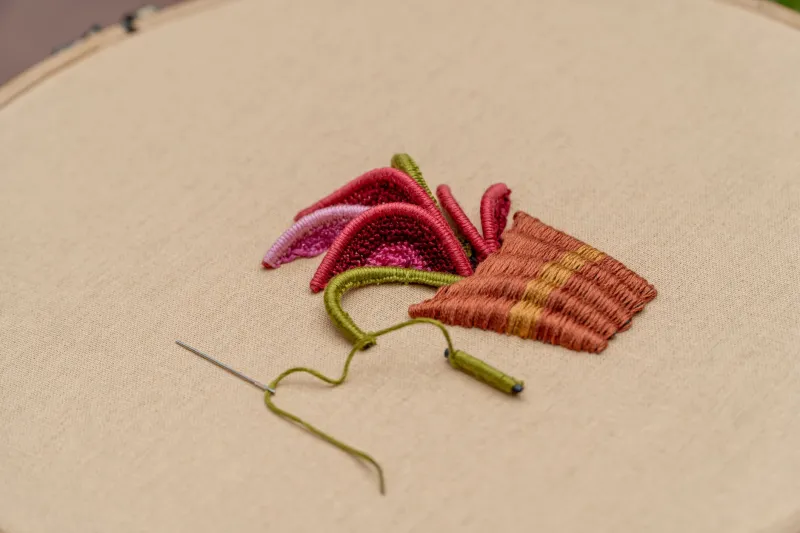
Competitive embroidery events range from small regional showcases hosted by local needlework guilds to larger national-level competitions with entry fees, judging panels, and prize purses that can climb into the thousands of dollars. The formats vary, but most serious competitions break entries into categories based on technique — think counted cross-stitch, crewelwork, goldwork, and the jaw-droppingly intricate Brazilian dimensional embroidery, which involves stitches that literally stand off the fabric in three-dimensional relief.
Judging criteria are no joke. Panels typically assess tension consistency, color blending, design complexity, finishing quality, and something competitors call "hand" — essentially the overall feel and precision of the stitchwork when examined up close. A piece that looks stunning from three feet away can still get knocked down if the back of the hoop is messy, because yes, judges flip the work over. That level of scrutiny keeps competitors obsessing over details most people would never notice.
Timed challenge rounds have also started appearing at newer events, borrowing a format familiar to fans of competitive cooking shows. Stitchers get a set window — sometimes as short as two hours — to complete a defined element on a provided piece. It adds a performance pressure that traditional craft competitions never really had, and audiences love it.
The Regional Rivalry Nobody Talks About
Ask any serious competitor and they'll tell you: the embroidery circuit has its fault lines. The South, particularly Texas and the Carolinas, has a deep tradition of heirloom needlework and tends to dominate in classical European-style categories. The Pacific Northwest has developed a reputation for avant-garde mixed-media pieces that push the boundaries of what judges even consider "embroidery" anymore. The Midwest, anchored by strong guild networks in states like Illinois and Minnesota, consistently produces technically precise competitors who win on execution even when they lose on flash.
These aren't just friendly regional differences. Talk to competitors long enough and you'll hear genuine frustration about judging bias, whispered debates about which regional styles get taken more seriously, and the kind of territorial pride that shows up in any sport where geography shapes identity. It's the same energy you get from barbecue regionalism or college football rivalries — just expressed through silk thread and a whole lot of patience.
The Generation Shift Changing Everything
Here's where the story gets genuinely interesting. The demographic makeup of competitive embroidery has shifted dramatically over the past five to seven years, and the people driving that change are not who the old guard expected.
Younger competitors — many in their 20s and 30s — started flooding into the craft during the pandemic years, when hands-on hobbies exploded in popularity and platforms like TikTok and Instagram turned needlework into unexpectedly viral content. Accounts dedicated to embroidery time-lapses and stitch tutorials racked up millions of views. Suddenly, a craft that had struggled to attract new blood for a generation found itself with a massive, engaged, and surprisingly competitive new audience.
What these newer competitors brought wasn't just enthusiasm. They brought different aesthetic influences, a comfort with blending traditional techniques with contemporary design, and — critically — a social media savvy that started putting competitive embroidery in front of audiences who had never heard of it. Event organizers noticed registration numbers climbing. Vendors at competitions reported selling out of premium thread stock. The energy shifted.
The tension between old-school traditionalists and the newer wave of competitors is real, but most people inside the community describe it as productive friction rather than outright conflict. Veterans bring institutional knowledge and technical depth. Newcomers bring energy, visibility, and a willingness to experiment. The competitions themselves have gotten better for it.
Why It's Harder Than It Looks (And It Already Looks Hard)
Non-stitchers tend to underestimate the physical and mental demands of serious embroidery work. Competitive-level pieces can require hundreds of hours of labor. Goldwork — a technique involving real metal threads stitched over padded forms — demands a steadiness of hand that takes years to develop. Color theory knowledge matters enormously; blending thread shades to create smooth gradients is a skill that separates good embroiderers from truly elite ones.
Repetitive strain injuries are a real occupational hazard. Serious competitors talk about hand and wrist management the way distance runners talk about injury prevention. Ergonomic frames, scheduled breaks, and specific stretching routines are standard practice for anyone putting in serious training hours before a major competition.
Yes, training hours. This is not a hobby people wander into and immediately start winning.
Getting Into the Circuit
If this sounds like your kind of rabbit hole, the entry points are more accessible than you'd think. The Embroiderers' Guild of America remains the most established national organization, with chapters in most states and a robust competition calendar. Beyond that, regional fiber arts festivals — events like those run through state fair systems or independent needlework societies — often include competitive embroidery divisions that welcome first-time entrants.
Online communities have made finding your footing significantly easier. Subreddits, Facebook groups, and Discord servers dedicated to competitive needlework are active and genuinely welcoming to newcomers who show up with real curiosity and a willingness to learn.
The prize money at the top levels is real, but most competitors will tell you that's not the primary draw. What keeps people coming back is the combination of technical mastery, creative expression, and a community that takes the craft as seriously as any traditional sport. The trophies are just a bonus.
The Bigger Picture
Competitive embroidery is part of a broader pattern HobbaVerse has been tracking for a while now — niche craft disciplines that were quietly serious all along, finally getting the attention they always deserved. The people who've been showing up to these competitions for years didn't need mainstream validation. But it's nice to watch the world start to figure out what they already knew.
The needle is moving, so to speak. And the work is genuinely beautiful.