Wool, Sweat, and Winner-Take-All: The Fierce World of Competitive Felt-Making You Never Knew Existed
When most people think about felt, they picture kindergarten art projects and maybe a sad holiday wreath hanging on someone's door. They are not picturing a grown adult hunched over a giant foam mat at 7 a.m., arms burning, working raw wool into a three-dimensional sculpture that could win them ten thousand dollars. But that's exactly what's happening in gyms, fairgrounds, and convention halls from Portland, Oregon to Asheville, North Carolina.
Competitive felt-making is real. It is organized. And it is way more intense than anyone outside the community expects.
So What Even Is Competitive Felting?
For the uninitiated, felting is the process of matting and compressing wool fibers together — either through agitation with water and soap (wet felting) or with a barbed needle that tangles fibers mechanically (needle felting). Both techniques produce a dense, durable fabric or sculptural form, and both have their own competitive divisions at major events.
Wet felting competitors typically work against the clock to produce flat panels, wearable pieces like scarves or vests, or three-dimensional vessels. Needle felters, meanwhile, are often judged on sculptural work — animals, portraits, abstract forms — where precision, texture, and artistic vision all factor into scoring.
Judges look at everything: fiber consistency, structural integrity, surface quality, color blending, and overall artistic execution. There are technical deductions for uneven thickness, loose fibers, or what insiders call "pilling" — a surface flaw that separates the serious competitors from the hobbyists.
The Community Organizing All of This
The backbone of competitive felting in the United States is a loose but surprisingly well-coordinated network of fiber arts guilds, regional wool festivals, and dedicated felting associations. Events like the Oregon Flock and Fiber Festival, the Maryland Sheep and Wool Festival, and Rhinebeck's New York State Sheep and Wool Festival all host competitive divisions that draw serious entrants from multiple states.
But the deeper competitive circuit runs through organizations like the Handweavers Guild of America and various regional felting collectives that host standalone tournaments. These aren't casual county-fair ribbon situations. Entry fees, structured judging rubrics, and prize purses that can climb into the thousands — and occasionally higher for invitational events — make these competitions legitimate in a way that surprises outsiders.
"People assume it's just a little ribbon and a handshake," says one veteran competitor from Colorado who's been entering regional felting events for over a decade. "Then they see the prize table and their whole face changes."
Some invitational championships have featured top prizes ranging from five thousand to over ten thousand dollars, depending on sponsorships from fiber suppliers, dye companies, and wool farms. The stakes have climbed steadily as the community has grown and organized.
The Technical Grind Behind the Glory
Don't let the soft materials fool you. Competitive felting is physically demanding and technically complex in ways that take years to master.
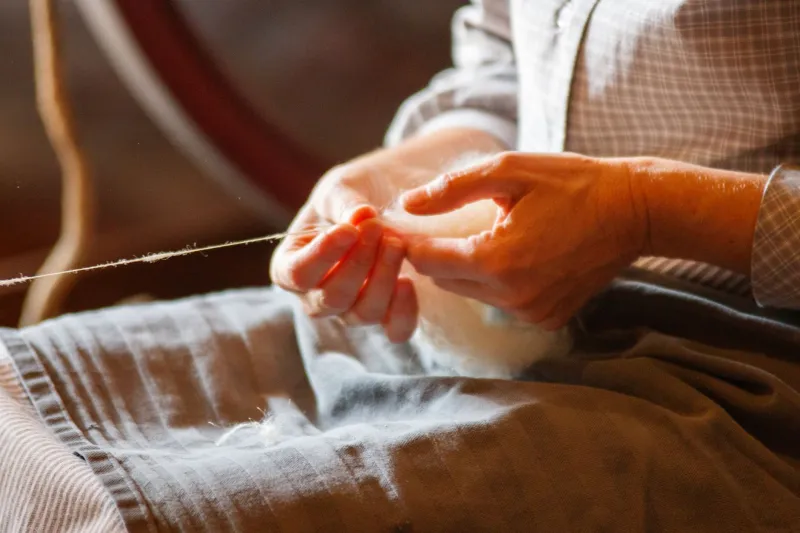
Wet felting, in particular, requires serious upper body endurance. Competitors spend hours agitating wool by hand — rolling, pressing, throwing — to achieve the right density and shrinkage rate. Miscalculate your shrinkage and your finished piece comes out the wrong size. Over-felt and the material becomes brittle. Under-felt and it falls apart under judging scrutiny. The margin for error is genuinely slim.
Top competitors spend months preparing for major events, sourcing specific wool breeds for particular projects (Merino for softness, Corriedale for durability, coarser breeds for sculptural work), and testing color combinations with acid dyes or natural plant dyes. Many keep detailed notebooks tracking water temperature, soap ratios, and agitation times the way a serious baker tracks hydration percentages in bread dough.
Needle felting competitors have their own obsessions. The gauge of the needle, the angle of entry, the layering sequence for color work — all of it matters enormously when you're trying to render a photorealistic barn owl out of wool fiber and have it judged against a dozen other photorealistic barn owls.
Profiles in Felt: The People Who Live for This
The felting competitive circuit has its own recognizable names — people who travel the regional circuit, rack up wins, and mentor newer competitors.
Take a look at the upper divisions of any major fiber arts competition and you'll start seeing the same names cycle through. There are former textile designers who pivoted to competitive felting after retirement. There are self-taught artists from rural communities who learned from YouTube tutorials and built their way up to national-level events. There are college students studying fiber arts who treat regional competitions as both resume-builders and income supplements.
One thing most serious competitors share: they didn't stumble into this. They were pulled in by the community — the workshops, the guild meetups, the online forums where people post close-up photos of their fiber work for critique. The competitive element came later, after the craft itself had already become a genuine passion.
"I didn't even know competitions existed for the first two years I was felting," one mid-Atlantic competitor explained. "Then someone in my guild mentioned a regional show and I thought, why not? I placed third my first time out. That was it. I was hooked."
Why It's Blowing Up Right Now
There are a few forces driving the growth of competitive felting in the US. The broader craft revival that accelerated during the pandemic sent a wave of new people into fiber arts, and some percentage of those people — the ones with a competitive streak — eventually found their way to the tournament circuit.
Social media has also played a huge role. Needle felting videos perform remarkably well on TikTok and Instagram, where the transformation from loose wool to detailed sculpture is genuinely satisfying to watch. That visibility has introduced the craft to younger audiences who might never have encountered it otherwise. When those viewers eventually pick up needles themselves, some of them end up at competitions within a year or two.
Fiber supply companies have noticed. Sponsorships at major felting events have grown, prize money has increased, and the overall production quality of competitions — better venues, structured brackets, certified judges — has improved alongside the community's ambitions.
Where to Start If You're Curious
If any of this sounds like your kind of thing, the entry point is easier than you'd think. Most regional wool festivals welcome first-time competitors and offer beginner divisions where the judging criteria are more accessible. The Handweavers Guild of America's website is a solid starting point for finding local guilds and upcoming events. Online communities on Reddit and Facebook host active felting groups where experienced competitors regularly share advice.
And if you're the type who needs to see it to believe it — find a major fiber festival near you and just walk through the competition hall. Watch someone wet-felt a vessel from scratch in real time, or study a needle-felted portrait up close and try to figure out how it's even possible that it's made of wool.
The competitive felting world doesn't need your validation to keep doing what it's doing. But once you actually see it, you'll understand why these people are so serious about a craft that the rest of the world is still sleeping on.