Quack Attack: Inside the Wild, Surprisingly Competitive World of Rubber Duck Racing
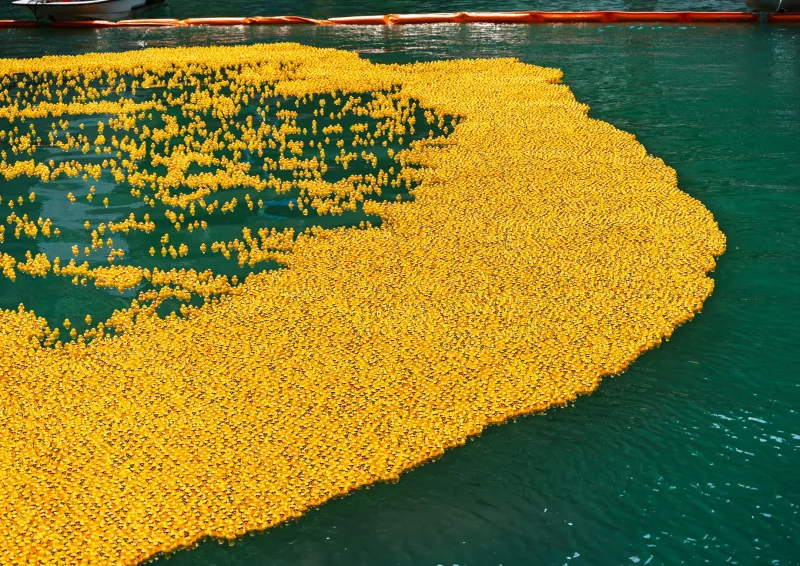
If someone told you five years ago that grown adults across the United States were spending their weekends modifying rubber ducks for competitive racing events — complete with sponsorships, prize pools, and heated rivalries — you'd probably laugh. And honestly? That reaction would've been pretty reasonable. But here we are in 2025, and rubber duck racing has quietly carved out a legitimate niche in the American hobby landscape, attracting everyone from retired engineers to college students who just really, really care about hydrodynamics.
Welcome to one of the most delightfully absurd corners of the HobbaVerse.
From Bathtubs to Battlegrounds
The roots of rubber duck racing aren't exactly ancient history. Charity duck races — where thousands of identical numbered ducks are dumped into a river and locals buy "adoption" tickets to root for their bird — have been a staple of American fundraising events since at least the 1980s. Towns from Portland, Oregon to Portland, Maine have hosted these events to raise money for everything from youth sports leagues to local food banks.
But somewhere along the way, a subset of participants decided they wanted more. More control. More strategy. More duck.
The shift toward competitive, individualized racing started gaining traction in the mid-2010s, particularly in the Pacific Northwest and parts of the Midwest where creek culture and DIY ingenuity intersect in interesting ways. Small groups began organizing informal races on local waterways, each competitor bringing their own personally modified duck. The rules were loose, the vibes were high, and the seeds of a genuine subculture were planted.
The Art (and Science) of Duck Modification
Here's where things get genuinely fascinating. Serious rubber duck racers — and yes, they are serious — don't just slap their name on a stock yellow duck and call it a day. These folks are deep in the weeds on fluid dynamics, weight distribution, and surface tension.
Take Marcus Webb, a mechanical engineer from Columbus, Ohio, who's been competing in organized duck races for about four years. He describes his process like a product development cycle. "I started by testing different keel attachments to improve straight-line tracking in current," he explained during a recent community meetup stream. "Then I moved into hull modifications — shaving down the base to reduce drag. My current duck, 'Velocity Yolk,' has a tungsten ballast insert and a low-profile silicone coating."
Velocity Yolk, for what it's worth, has apparently won three regional events.
Not everyone goes full aerospace on their builds, though. Plenty of competitors approach duck modification from a more artistic angle, creating elaborate paint jobs, themed costumes, or personality-driven designs. There's a whole aesthetic subculture around "character ducks" — builds that prioritize visual identity over raw speed. Think of it as the show car versus race car divide, but make it waterfowl.
Organized Leagues and the Rise of Official Events
As the community grew, so did the infrastructure around it. Regional clubs started forming in states like Texas, Colorado, Michigan, and the Carolinas. Online forums and Discord servers became hubs for sharing build specs, race footage, and trash talk. And perhaps most significantly, a handful of organizers began establishing standardized rulebooks — something that's been both celebrated and hotly debated within the community.
The Rubber Duck Racing Association of America (RDRAA), an informal but increasingly influential organizing body, has been working to establish consistent race formats, duck classification categories (stock, modified, and open class), and safety guidelines for waterway events. Their annual championship event, held most recently in Chattanooga, Tennessee along the Tennessee River, drew over 400 participants and generated enough buzz to land a segment on a regional morning news show.
Prize pools at major events have crept into the hundreds of dollars for top finishers — not exactly life-changing money, but enough to signal that people are taking this seriously. Some regional events have attracted local business sponsorships, with hardware stores and outdoor recreation brands seeing value in aligning with the community's DIY, outdoorsy energy.
Why Does This Keep Happening?
If you zoom out, rubber duck racing is part of a broader pattern that HobbaVerse has been tracking for a while now: niche, playful activities gaining legitimate competitive structures because passionate communities demand it. We've seen it with competitive Lego building, professional yo-yo circuits, and drone racing's meteoric rise from hobby shops to ESPN coverage.
There's something deeply human about taking something inherently silly and deciding it deserves to be taken seriously. It's not ironic participation — most duck racers aren't doing this despite the absurdity, they're doing it because the absurdity makes it accessible. There's no gatekeeping, no expensive barrier to entry (a rubber duck costs maybe three bucks), and no cultural baggage telling you that you have to be a certain type of person to compete.
"I tried getting into road cycling for a while and it just felt so... intense and expensive and kind of unwelcoming," said Priya Nair, a graphic designer from Austin who runs her own duck-focused Instagram account with nearly 8,000 followers. "Duck racing is the opposite. Everyone's laughing, everyone's welcoming, but people still genuinely want to win. It scratches the competitive itch without all the ego."
That combination — low stakes entry, high passion ceiling — seems to be the secret formula for this kind of niche community growth.
Getting Into the Float
If reading this has sparked even a flicker of interest, getting started is genuinely easy. A basic rubber duck can be found at any dollar store or toy shop. Most beginner-friendly races are organized through local Facebook groups or Meetup.com pages — searching "duck race" plus your city will usually turn up something within driving distance.
For those who want to go deeper, the RDRAA's website (still a work in progress, very much in the spirit of the community) hosts a build guide wiki and a race calendar that's updated regularly. YouTube channels dedicated to duck modification have started accumulating real subscriber counts, with build tutorial videos regularly hitting tens of thousands of views.
And if you want to find your people before committing to a waterproof hobby box full of modified waterfowl, the community Discord servers are surprisingly active and welcoming to newcomers asking basic questions.
The Bigger Picture
Rubber duck racing probably won't be an Olympic sport anytime soon. But that's kind of the point — it doesn't need to be. It exists in that perfect sweet spot where joy, creativity, and genuine competition overlap, and where the community itself sets the terms of engagement.
In a hobby landscape increasingly dominated by expensive equipment, rigid hierarchies, and social media performance anxiety, there's something quietly radical about a bunch of people gathering by a creek with modified bath toys, arguing good-naturedly about drag coefficients, and just... having a genuinely great time.
The HobbaVerse is full of communities like this. Rubber duck racing just happens to be one of the most joyfully unhinged examples of what happens when passion meets play.
Have you raced ducks competitively or attended a charity race event? Drop your stories in the comments — we want to hear from the community.