Quarter Drop, Clock Stopped: The Obsessive World of Arcade Speedrunning Is Rewriting What 'High Score' Means
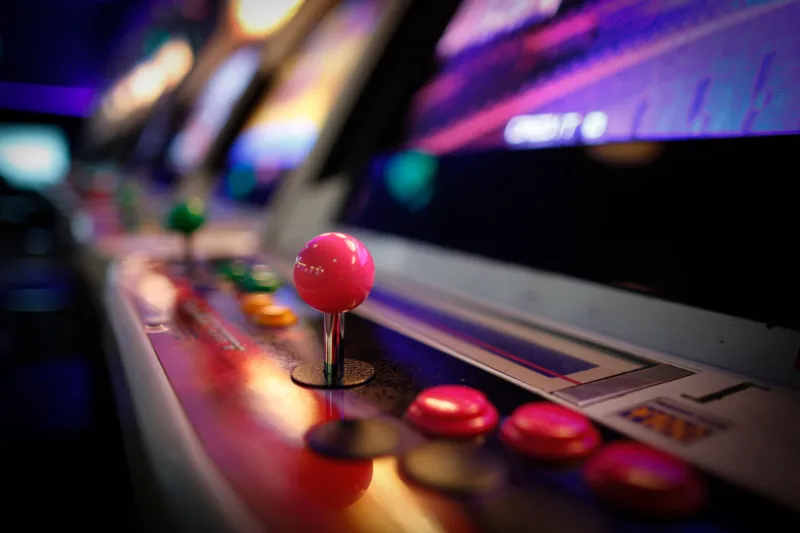
There's a moment every serious arcade speedrunner knows. The cabinet hums. The attract screen loops. You've played this game ten thousand times — you know the sound of every sprite, every collision, every pattern the AI will throw at you. And then the timer starts. For the next few minutes, nothing else exists.
Welcome to competitive arcade speedrunning, one of the most exacting and least understood corners of the gaming world. While mainstream esports fills arenas with LED rigs and energy drink sponsorships, this community operates in basements, barcades, and Discord servers — quietly dismantling decades-old records on machines that were built before most of their players were born.
Not Your Dad's High Score Board
Classic arcade speedrunning is fundamentally different from the high-score chasing that dominated the 1980s. Where a high-score run rewards patience, resource management, and longevity, a speedrun is about surgical efficiency. Every frame matters. Every input has to be deliberate. On a game like Pac-Man, runners aren't just trying to clear boards — they're optimizing ghost manipulation, corner cuts, and power pellet timing down to individual animation frames. On Donkey Kong, the difference between a world-class run and an amateur one might come down to a single jump arc that saves 0.4 seconds across a four-board loop.
"People think these games are simple because they look simple," says Marcus Teal, a 34-year-old IT technician from Columbus, Ohio, who holds verified top-10 times on three separate Galaga variants. "They are not simple. The depth is insane once you start pulling it apart."
Teal has been running arcade titles competitively for six years. He streams his sessions on Twitch three nights a week, where a modest but intensely loyal audience watches him dissect patterns and reset runs with the clinical calm of a surgeon who's performed the same procedure hundreds of times.
The Technology Behind the Milliseconds
Modern arcade speedrunning has a surprising amount of tech infrastructure propping it up. Frame-accurate timing software, HDMI capture cards rigged to original hardware, and purpose-built timer overlays are now standard equipment for anyone serious about verification. The community has largely moved away from self-reported times — leaderboards on platforms like Speedrun.com require video evidence, and the more competitive categories demand multiple camera angles to confirm inputs and rule out manipulation.
Original arcade cabinets add another layer of complexity. Unlike console emulation, where hardware behavior can be standardized, physical machines vary. PCB age, monitor refresh rates, and even temperature can affect game behavior in ways that runners have to account for. Some competitors maintain multiple boards of the same game, testing them against each other to find the most consistent performer.
"I have three Galaga boards," Teal says, not even slightly embarrassed about it. "Two are backups. One is the one I trust."
Authentication has become a serious topic in the community, particularly after a handful of high-profile disputes over manipulated footage rattled leaderboards a few years back. Most top-tier runners now submit to peer review from designated verifiers — community members with deep enough game knowledge to spot irregularities in timing, movement, or enemy behavior.
Streaming Changed Everything
Before Twitch and YouTube made niche content viable, arcade speedrunning existed mostly as a word-of-mouth pursuit. Runners would share VHS tapes, post to early gaming forums, or simply show up at conventions with printed documentation of their times. The audience was tiny and deeply invested.
Streaming blew the ceiling off that model. Today, a well-timed personal record clip can rack up tens of thousands of views overnight. Runners like Donkey Kong specialist Rachel Voss — who goes by "LadderLegend" online and streams out of her apartment in Portland — have built followings in the mid-five-figures by combining genuine world-class play with accessible commentary that explains what's happening for non-experts.
"I do a lot of teaching on stream," Voss says. "I want people to understand why that particular jump is hard, why that frame matters. If they get it, they stick around. And they do get it."
Sponsorship has started trickling in, too. Retro gaming hardware brands, arcade restoration shops, and even a few peripheral manufacturers have begun approaching top runners with partnership deals. It's not Call of Duty money — not by a long shot — but for a hobby that once operated entirely on passion alone, having companies pay attention feels like a genuine shift.
Tournaments and the Live Scene
Beyond streaming, a growing live tournament circuit has given the community a social backbone. Events like the Portland Retro Gaming Expo and the California Extreme arcade festival now include dedicated speedrun competitions alongside their classic gaming floors. Participants compete on original hardware, witnessed in person, with times verified by on-site officials.
The atmosphere at these events is something between a chess tournament and a track meet — quiet intensity punctuated by eruptions when someone drops a record or narrowly misses one. Spectators cluster around cabinets. Runners shake hands, argue about optimal routing, and immediately pull out their phones to show each other footage.
"It's the best community I've ever been part of," says Teal. "Everyone's competitive, but everyone also wants everyone else to get better. We're all kind of fighting the game together, even when we're fighting each other."
For a hobby built around machines designed to eat quarters as fast as possible, competitive arcade speedrunning has built something surprisingly durable — a community of people who found depth where others saw disposable entertainment, and who are still finding new ways to go faster.