Knit Fast, Win Hard: Inside America's Cutthroat Competitive Knitting Scene
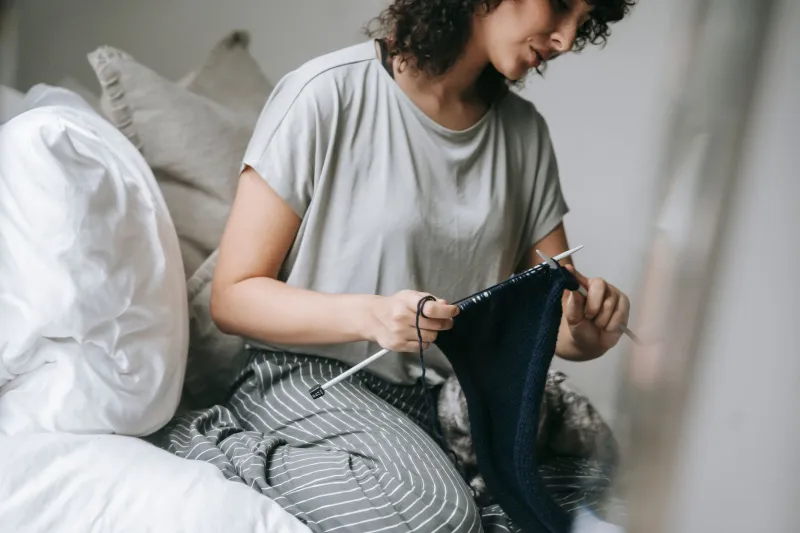
Picture this: a gymnasium full of people hunched over their needles, hands moving at a pace that would make a court stenographer jealous, eyes locked on yarn like it owes them money. There's a scoreboard. There are judges. There's tension thick enough to knit a sweater out of.
Welcome to competitive knitting — and yes, it is absolutely as intense as it sounds.
For the uninitiated, the idea of knitting as a sport might raise an eyebrow or two. But spend five minutes at one of the regional fiber arts competitions popping up across the US — from Portland, Oregon to Asheville, North Carolina — and that skepticism evaporates fast. These competitors aren't just crafting. They're training.
Speed Is Only Half the Battle
Most outsiders assume competitive knitting is a pure speed contest. Get the yarn from A to Z faster than everyone else, take home the ribbon. But veteran competitors will tell you that's like saying chess is just about moving pieces quickly.
"Speed matters, sure, but it's table stakes," says Darlene Kowalski, a three-time regional title holder from Columbus, Ohio. "If your tension is off or you drop a stitch, you're penalized. You can be the fastest person in the room and still lose because your gauge is all over the place."
Competitions typically judge on a combination of factors: completion time, stitch accuracy, tension consistency, and overall finish quality. Some events even include "blind pattern" rounds, where competitors receive an unfamiliar pattern at the start of the heat and have to execute it cold — no prep, no practice run. It's the fiber arts equivalent of sight-reading a concerto.
The patterns themselves range from beginner-accessible ribbing challenges all the way up to complex colorwork like Fair Isle or stranded techniques that require knitters to manage multiple yarn colors simultaneously without tangling or puckering the fabric. Top-tier competitors often specialize in one technical discipline, spending months drilling a single stitch pattern the way a basketball player might work on their three-point shot.
The Training Regimen Nobody Talks About
Here's what surprises most people when they first learn about the competitive circuit: these knitters train. Like, seriously train.
Marco Delaney, a fiber arts coach based in Austin, Texas, works with competitive knitters on everything from hand positioning to mental focus. "The physical side is real," he explains. "We're talking about repetitive fine motor movements performed under pressure for sustained periods. Wrist health, finger dexterity, posture — all of it matters. I have athletes doing hand stretches and grip exercises the same way a pianist would."
Mental preparation is just as critical. Many top competitors describe competition day as a high-anxiety environment where the pressure to perform can cause even experienced knitters to fumble stitches they've executed thousands of times in practice. Breathing techniques, visualization, and even mindfulness meditation have all found their way into serious competitors' pre-event routines.
The community has also developed its own shorthand for the psychological warfare that can happen at big events. "Needle intimidation" — deliberately using flashy, premium equipment to psych out opponents — is a real phenomenon that veteran competitors joke about with the kind of knowing laugh that tells you it's only half a joke.
Regional Scenes and the Road to Nationals
The competitive knitting ecosystem in the US is decentralized by nature, built from a patchwork of local guilds, fiber festivals, and independent organizations rather than one governing body. Events like Stitches United, regional yarn festivals, and guild-organized competitions serve as qualifying grounds where knitters accumulate points, build reputations, and scout their competition.
The Midwest has quietly become a powerhouse region, with Ohio, Wisconsin, and Minnesota producing a disproportionate share of top-ranked competitors. The Pacific Northwest has a thriving scene driven by its deep yarn and fiber culture. And the South — particularly Tennessee and North Carolina — has seen explosive growth in competitive participation over the last five years, fueled partly by a surge of younger knitters who discovered the craft during the pandemic and never looked back.
For many competitors, the social dimension of the circuit is just as compelling as the competition itself. "I've made some of my closest friends through this," says Priya Nair, a competitive knitter from Nashville. "You're rivals in the ring, but afterward everybody's comparing yarn sources and talking shop. It's a real community."
The Gear Arms Race
Like any competitive hobby that takes itself seriously, the knitting world has its own equipment culture — and it can get expensive.
High-end interchangeable needle sets from brands like Addi, Chiaogoo, and Knitter's Pride are the equivalent of premium athletic footwear in this world. Serious competitors often have strong opinions about needle material — metal versus wood versus carbon fiber — and the debates get heated. Metal needles are faster because yarn slides more freely; wooden needles offer more grip and control for intricate work. The right choice depends on the event format and the competitor's personal style.
Yarn selection is equally strategic. Competition-legal yarns must typically meet specific weight and fiber content requirements, but within those rules there's plenty of room for optimization. Smooth, tightly plied yarns work up faster; textured or halo yarns (looking at you, mohair) can slow a knitter down and make stitch counting harder. Knowing which yarn to bring to which competition is itself a skill.
More Than a Hobby, Not Quite a Mainstream Sport — Yet
Competitive knitting occupies a fascinating middle space in American hobby culture. It doesn't have the TV deals or the stadium crowds of traditional sports, but it has something a lot of those sports lack: a genuinely passionate, deeply knowledgeable fanbase that shows up because they love it, not because they're supposed to.
Online communities on platforms like Ravelry and various subreddits have helped the competitive scene grow by connecting knitters across geographic boundaries, sharing event listings, and creating spaces where technique debates rage with impressive fervor. Livestreamed competitions have started attracting viewers who tune in with the same energy as any other niche sports broadcast.
Whether competitive knitting ever crosses over into broader mainstream recognition almost seems beside the point to the people actually doing it. They're not waiting for a network deal. They're already at the table, needles moving, patterns memorized, ready to go.
And honestly? We're here for it.