Gravity's Got Nothing on These Guys: The Meditative Mayhem of Competitive Rock Stacking
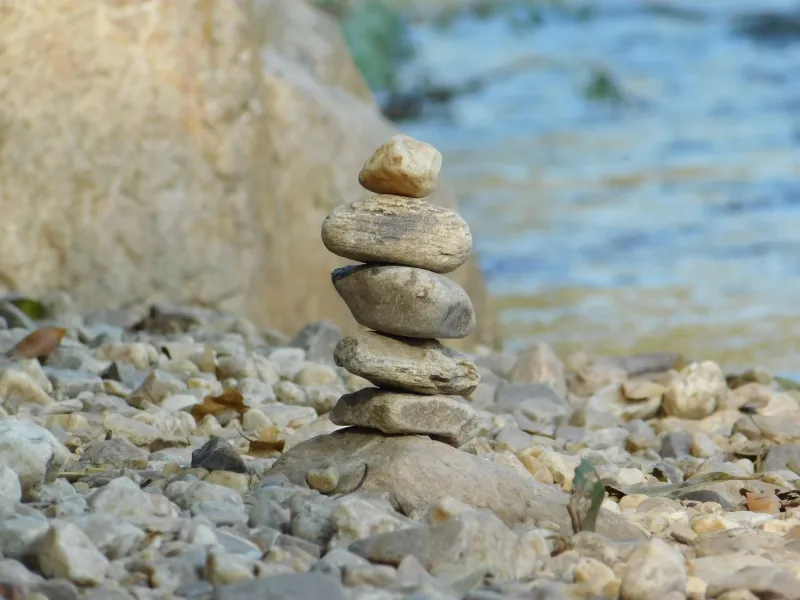
There's a moment, about forty-five seconds into a competitive stack, when the crowd goes completely silent. No phones. No heckling. Just a guy in a wide-brimmed hat, sweat beading on his forehead, easing a lumpy piece of granite onto a tower that's already seven rocks high and looks, frankly, like it should violate several laws of physics.
Then the timer buzzes, the stack holds, and the silence explodes into the kind of roar you'd expect at a buzzer-beater.
Welcome to the competitive rock stacking circuit — the most zen bloodsport in America.
It Started as Meditation. Then Someone Brought a Stopwatch.
Stone balancing has been around forever. Street performers in Barcelona, beach hippies in Santa Cruz, your uncle at the lake house who 'just finds it relaxing.' For decades, it was a solo pursuit, a moving meditation.
Then somebody made it a competition, because of course they did.
Today's circuit runs through lakeside towns that have figured out something smart: rock stacking tournaments draw tourists, and tourists draw vendor fees. Barton Springs in Austin hosted a qualifier this spring that sold out three weeks in advance. A small Vermont river town — the organizers asked us not to name it, worried about crowds next year — saw over two thousand spectators line its banks.
The format is deceptively simple. Stackers get a pile of local stone, a time limit, and a scoring rubric that judges height, difficulty, artistic balance, and whether the thing survives a wind check. Judges walk the perimeter with clipboards and the grim focus of IRS auditors.
The Glue Wars
Every niche sport has its cheating scandal, and rock stacking's is delightfully literal: adhesive.
The rules are clear — no glue, no pins, no secret dowels. But rumors of 'sticky stackers' have plagued the circuit for two seasons now. At one Texas event, a top-three finisher was disqualified after a judge noticed his tower's base rock rotated too smoothly during inspection. Organizers have since added a teardown protocol: every winning stack gets dismantled on the spot, rock by rock, in front of the crowd.
'It's not about catching cheaters,' one head judge told us. 'It's about the audience seeing the tower come apart and knowing it was held by nothing but friction and nerve.'
Purists love the drama. Skeptics love the schadenfreude. Either way, the teardown has become the circuit's signature moment.
Meet the Stacking Elite
The top of the sport is small, tight-knit, and weirdly athletic. We watched one stacker — a former rock climbing gym manager from Colorado — warm up by balancing a two-hundred-pound boulder on a contact patch the size of a coaster.
The reigning champion of the Southwest bracket, a retired mason from Waco, treats stacking like a trade. 'Twenty years of laying brick teaches you where a stone wants to sit,' she told us. 'My job is just to shut up and listen.'
Her rival, a 26-year-old art school grad from Portland, takes the opposite approach: he calls his stacks 'temporary sculptures' and gets visibly annoyed when the word 'sport' comes up. The tension between the athletes and the artists is the circuit's best ongoing storyline — one camp trains with metronomes and grip strengtheners, the other meditates by the water before competing.
Why Lakeside Towns Are All In
For host communities, the math is simple. Stacking tournaments are cheap to run (the venue is a riverbank), visually stunning (towers against a sunset photograph beautifully), and family-friendly in a way that doesn't feel sanitized. Local outfitters rent out waders so spectators can wade into shallows for a better view.
Vermont's chamber of commerce reported one of its best shoulder-season weekends on record during last fall's championship. A Texas RV park near the Austin qualifier booked out a full year ahead.
'They come for the rocks,' one organizer shrugged, 'but they stay for the teardown.'
Try It Yourself
The barrier to entry is basically zero. Find a legal spot — please, don't stack in protected streams or move rocks in national parks, where it disturbs aquatic habitats — grab some river stone, and start small. Two rocks. Then three.
Fair warning: your first tower will fall. Everyone's does. The stackers we met all said the same thing, with the serene smile of people who have found something the rest of us haven't: the falling is kind of the point.
The clock, the judges, the crowds — those are just excuses to spend a Sunday doing absolutely nothing, perfectly.