Garage-Built Rockets: How Weekend Pilots Are Chasing Six Figures in the FPV Drone Racing Boom
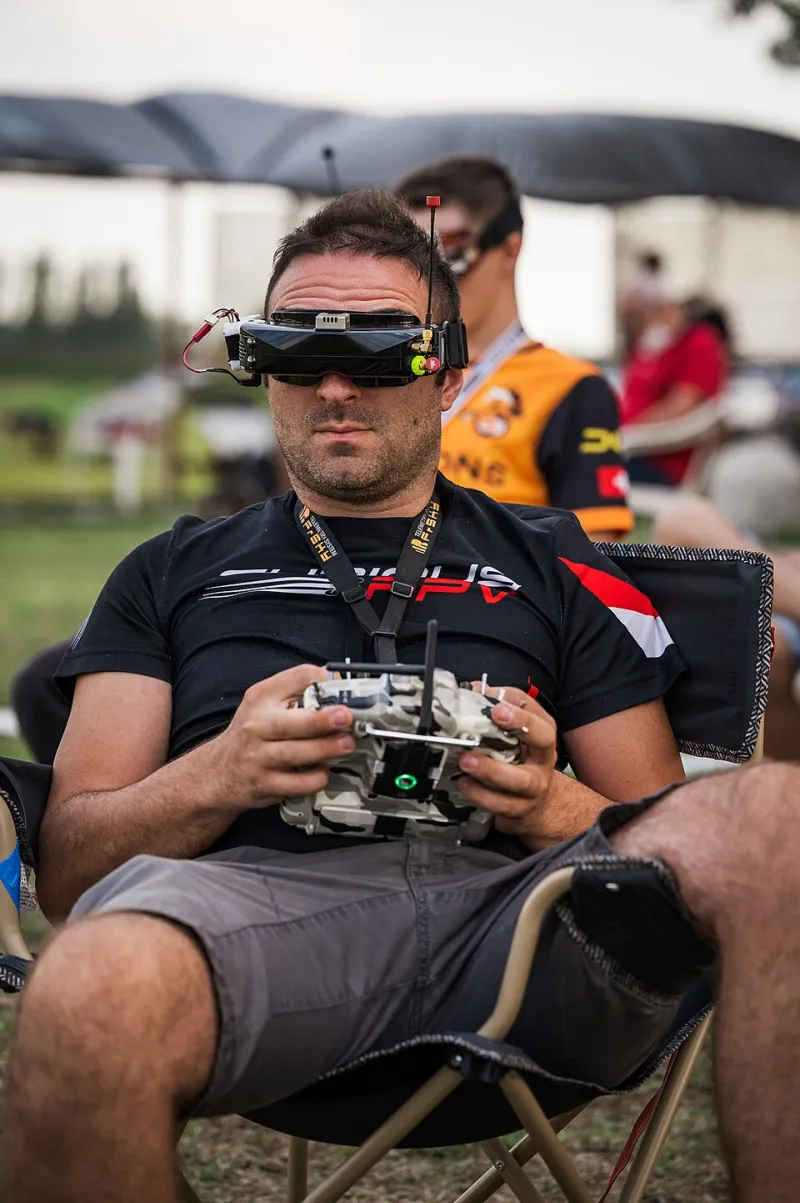
Photo: Mr.Oizo FPV, CC BY-SA 4.0, via Wikimedia Commons
Walk into any regional drone race in America and you'll hear it before you see it: a high-pitched shriek, like a swarm of very angry mosquitoes, cutting through the air at 90 miles per hour. Then you'll see the pilots. They're not watching the sky. They're staring at the ground, faces buried in video goggles, thumbs twitching on controllers, flying entirely by feel.
This is FPV drone racing, and it has quietly grown from a hobby for tech tinkerers into a national circuit where top pilots pocket five- and six-figure payouts, land sponsorships from battery and radio manufacturers, and get recognized by name at events from Dallas to Denver.
The Garage Is the Factory
Ask any racer where their quad was built, and the answer is almost never a store. It's a garage workbench, a kitchen table, or a dorm room floor. Competitive racing drones aren't the consumer models you see at big-box stores — they're custom machines assembled from frames, motors, flight controllers, and cameras sourced piece by piece.
"Buying a racing drone prebuilt is like buying a race car from a dealership," says Marcus Ellery, a 27-year-old pilot from Ohio who finished top ten at a national qualifier last spring. "Nobody does it. You build, you crash, you rebuild. That's half the sport."
The build-it-yourself culture has created an entire secondary economy. Small American companies sell carbon fiber frames cut in family machine shops. Pilots trade soldering tips on Discord servers with tens of thousands of members. A competitive rig runs anywhere from $300 to well over $1,000, and crashes that snap arms and shred props are so routine that veterans carry spares in tackle boxes.
A Tech Arms Race at 90 MPH
The sport's history is a story of engineering one-upmanship. When brushed motors gave way to brushless in the mid-2010s, lap times plummeted. When digital video transmission replaced the fuzzy analog feed, pilots gained the clarity to fly tighter gates without losing the picture.
Every generation of hardware resets the field. "You can be the best pilot in your region, and a new motor comes out, and suddenly the kid who bought it first is beating you," Ellery says. "It keeps everybody hungry."
That arms race extends to tuning. Pilots spend hours adjusting flight controller software — tweaking filter settings, throttle curves, and PID loops — to shave hundredths of seconds off corners. Races are often decided by margins smaller than the weight of a propeller.
From Parking Lots to Prime Time
The pathway to the pro ranks runs through small, scrappy arena leagues. Multi-level indoor courses — built from netting, gates, and LED-lit hoops in warehouses and convention centers — have popped up across the country, giving newcomers a place to fly year-round regardless of weather.
These local leagues are the sport's farm system. Regional winners earn invitations to national qualifiers, and national podiums attract the attention of teams and sponsors. Prize pools at the top events have swelled into the six-figure range, with individual champions taking home tens of thousands of dollars for a single weekend's flying.
"Five years ago, if you told me I'd have a battery sponsor and free props for a season, I'd have laughed," says 19-year-old pilot Desiree Kang, who balances community college with a travel schedule that would exhaust a minor league baseball player. "Now my mom watches my races on the livestream."
Why the Crash Culture Works
What separates drone racing from most hobbies is the relationship with failure. Crashing isn't a setback — it's Tuesday. The best pilots are the ones who destroy the most equipment while learning a course fastest, then repair overnight and do it again.
That resilience has built a community that's unusually generous for something so competitive. Veterans hand newbies spare parts mid-event. Rival teams share tuning files. The same person trying to beat you in the finals might re-solder your camera cable an hour earlier.
"We all started because flying through a window at 70 miles per hour in goggles feels like a superpower," Kang says. "The racing is just the excuse to keep chasing that feeling."
The national circuit's next season is already booking venues, and participation numbers keep climbing. If a shrieking quad tears past a warehouse near you sometime soon, follow the goggles. That's where the pilots are — and some of them are flying their way to a very real paycheck.