Don't Blink: How Eyeball Staring Became America's Strangest Organized Sport
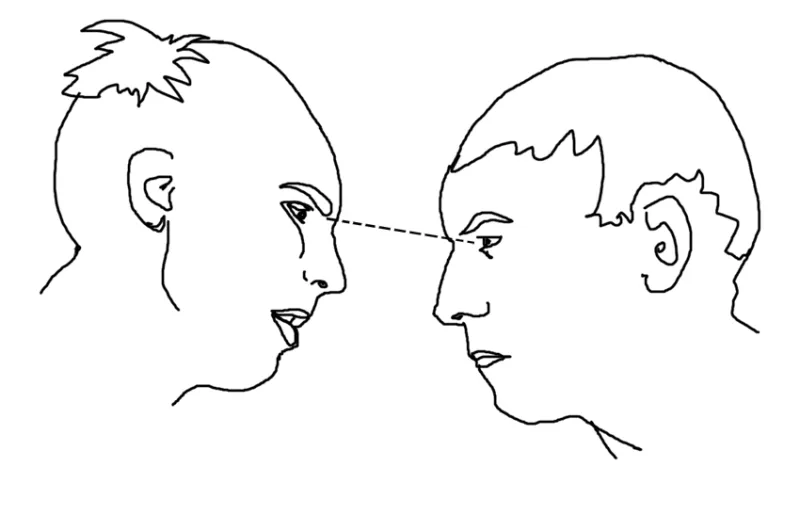
Photo: No machine-readable author provided. Clngre~commonswiki assumed (based on copyright claims)., CC BY-SA 3.0, via Wikimedia Commons
Let's be honest: the staring contest might be humanity's first sport. No equipment, no referees, no learning curve — just two people, two sets of eyeballs, and the slow collapse of one nervous system. And yet somehow, against all odds, it's having a moment in 2020s America. Organized leagues. Bracketed tournaments. Prize money. Yes, really.
From Dive Bars to Championship Brackets
The revival started the way most great American sports do: in bars. Chicago's bar-league staring circuit built a cult following with weekly tournaments, where regulars developed reputations and rivals kept mental scoreboards across months of matches. The format is simple — head-to-head, single elimination, first to blink loses — but the drama is anything but.
From there, things got organized. National championship events now draw competitors from across the country, with cash prizes that won't retire anyone but absolutely cover the bar tab. Spectators pack venues to watch complete strangers out-stare each other with the intensity of a title fight. There's trash talk. There are signatures and celebrations. There is, inevitably, a nemesis.
So How Do You Train for This?
Turns out the best stars treat it like an actual discipline. Common techniques from the competitive circuit:
- The pre-match dry-down. Avoiding blinking in the minutes before a match to build tolerance. Yes, it sounds like torture. Champions swear by it.
- The unfocused gaze. Instead of staring at the opponent's eyes, elite stars soften their focus slightly, reducing the urge to blink and the strain of visual lock.
- Breathing control. Like free divers, top competitors slow their heart rate to keep facial muscles — including eyelids — relaxed.
- Mental dissociation, basically. Multiple champions described going somewhere else entirely. One told us he recites baseball box scores from 1998 in his head. Whatever works.
Eye-Drop-gate
Of course, any sport with organized competition eventually gets its scandal, and staring's came fast: eye drops. Lubricating drops that extend blink tolerance are technically legal in most rulesets — but performance misting, numbing agents, and undisclosed 'moisture management' have sparked genuine controversies and at least one disqualification that live participants still argue about online.
Governing bodies (yes, there are governing bodies) have responded with rules on disclosure and waiting periods before matches. Whether that holds as stakes rise is anyone's guess. Every sport has its asterisk era. Staring got there in record time.
Why It's Working
There's a reason this ancient game is thriving in the age of everything-else: it's pure. No gear, no skill barrier, no months of practice to enter your first event. Anyone can sign up, and anyone can win — or at least, anyone can almost win before their face betrays them in round two.
It's also free entertainment in an expensive world. A tournament is just people looking at each other, which is simultaneously the least and most dramatic thing two humans can do. The tension is real, the comedy is built in, and the crowd participation is instant — everyone in the room is fighting the urge to blink along with the competitors.
So if a staring league pops up at your local bar, don't laugh. Buy a ticket, study the box-score-reciting champions, and start practicing your unfocused gaze. The oldest sport in human history is recruiting — and it only takes one blink to lose your spot.