Pucks, Hustle, and Glory: How Serious Air Hockey Players Are Cashing In on America's Favorite Arcade Game
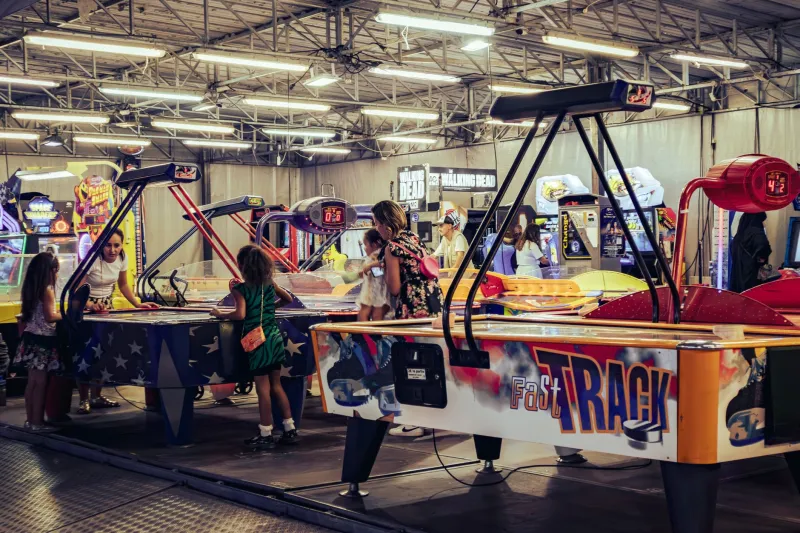
Walk into the right rec center on a Saturday night in cities like Dallas, Chicago, or Orlando, and you might stumble onto something that looks a little like a fever dream. Folding tables line the walls. Spectators lean in close, eyes locked on a hovering puck moving so fast it's practically invisible. Players crouch low, wrists snapping with surgical precision. There's money on the line — sometimes a lot of it. Welcome to the underground world of competitive air hockey, where the stakes are higher than anyone outside the community would ever guess.
For most Americans, air hockey is nostalgia fuel — something you played at the bowling alley birthday party in third grade or fed quarters into at the movie theater arcade. But for a growing, fiercely dedicated subculture of players across the United States, it's something else entirely: a serious sport with a national circuit, formal rankings, sponsorship deals, and prize pools that can climb well into five and six figures.
The Game Behind the Game
If you think air hockey is just about slamming a puck around and hoping for the best, the competitive crowd would like a word. The technical depth of high-level play is genuinely staggering. Elite competitors spend hours studying shot angles, practicing "cuts" and "straights," and developing defensive formations that mirror the strategic complexity of chess. The puck travels at speeds that can exceed 80 miles per hour on a regulation table, which means reaction times have to be extraordinary.
"People see air hockey and they laugh a little," says Marcus Delray, a nationally ranked player based out of Memphis who's been competing seriously for over a decade. "Then they watch a real match and their jaw drops. The level of hand-eye coordination, the mental game — it's not what they expected."
Top players break the sport down into layers: offensive shot selection, defensive wall positioning, reading an opponent's tendencies mid-match, and managing the psychological pressure of a close game. There are even specialized training regimens — drills for mallet speed, reflex exercises, and video review sessions where players break down their own matches frame by frame.
The Circuit That Runs Under the Radar
The United States Air Table Hockey Association (USATHA) has been organizing official competitive play for decades, but the scene has expanded significantly in recent years. Regional tournaments now pop up in practically every major metro area, feeding into a national championship structure that draws players from coast to coast. Some competitors travel to eight or ten events a year, logging serious road miles in pursuit of rankings points and prize money.
The community that's formed around these tournaments is tight-knit in the way only niche sports communities can be. There's a shared language, a set of inside references, and the kind of genuine camaraderie that comes from being part of something most people don't even know exists. Players crash at each other's houses between tournament stops. Group chats buzz constantly with strategy talk, trash talk, and tournament announcements.
"It's like a traveling family," says Jenna Kowalczyk, a top-ranked player from the Chicago area who's been competing for seven years. "You see the same faces at every event. You know everyone's game, everyone's tendencies. And then you shake hands and try to destroy each other on the table."
The Money Is Real — and Growing
Here's the part that tends to catch outsiders off guard: the financial side of competitive air hockey has gotten legitimately serious. Major tournaments now offer prize pools that can reach into the tens of thousands of dollars, and a handful of elite players have managed to piece together income streams that add up to something resembling a real living.
Sponsorship deals with table manufacturers, mallet companies, and even broader gaming and entertainment brands have started flowing toward top competitors. Players with strong social media followings are monetizing their content — YouTube breakdowns of match footage, TikTok trick shot videos, Instagram reels that rack up millions of views from people who had no idea air hockey could look like that.
Delray estimates that between tournament winnings, a sponsorship arrangement with a table equipment brand, and his growing YouTube channel, he pulled in close to $70,000 last year from air hockey alone. "I'm not getting rich," he says with a laugh. "But I'm definitely not losing money on this hobby anymore. It's a real thing now."
Other players supplement their competitive income by coaching — offering private lessons to recreational players or corporate team-building clients who want to level up their game room skills. The coaching market is small but growing, particularly in cities with active competitive communities.
What It Takes to Get Serious
For anyone curious about crossing over from casual player to competitor, the entry point is more accessible than you might think. Most regional tournaments welcome newcomers and have beginner or intermediate divisions alongside the elite brackets. The USATHA website is a solid starting point for finding events and connecting with local clubs.
The gear investment is real, though. Serious players are particular about their mallets — there's a whole ecosystem of aftermarket equipment with different weights, grip materials, and face sizes for different playing styles. Regulation tables vary too, and knowing how to adapt your game to different table speeds and airflow levels is itself a skill worth developing.
"The biggest thing is just showing up," Kowalczyk says. "Find a local tournament, enter the novice division, and get destroyed a few times. That's how everyone starts. The community is genuinely welcoming — they want more people to fall in love with this game."
Why This Moment Feels Different
Something is clearly shifting in the broader cultural landscape around niche competitive hobbies. The same era that's seen professional cornhole leagues, competitive Tetris documentaries, and pinball world championships covered by mainstream outlets is creating space for air hockey to step out of the arcade and into the spotlight. Streaming platforms and social media algorithms are rewarding weird, surprising content — and a perfectly executed bank shot dropping into a regulation goal at 70 miles per hour is genuinely compelling to watch, no prior knowledge required.
For the players who've been grinding in regional gyms and hotel ballrooms for years, the attention is both validating and a little amusing. They always knew what they had. The rest of the world is just starting to figure it out.
"Air hockey never went away," Delray says. "It was always here, always serious, always competitive. People are just finally paying attention."
And if the trajectory holds, the pucks are only going to keep moving faster.