One Wrong Nudge: The Fragile Glory of Competitive Domino Toppling
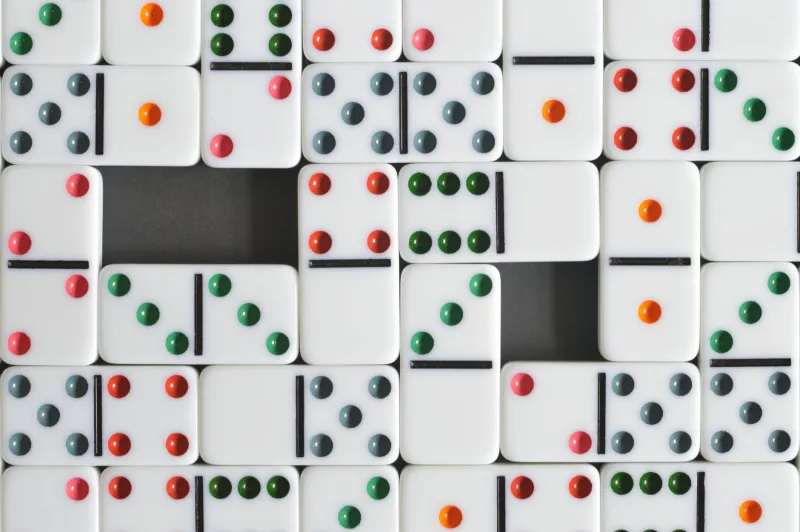
At a community center in suburban Dallas, a man in knee pads is crawling along the floor with the focus of a bomb technician. He is placing dominoes. Not playing them—placing them. Around him, a 4,000-piece build snakes into a spiral of color. In twenty minutes, a judge will start a clock. In twenty-one minutes, it could all be kindling.
Competitive domino toppling is not the quiet coffee-table pastime your aunt remembers. It is a precision sport with timed builds, themed layouts, and crowds that gasp at the sound of a wrong nudge. The US scene is small but devoted, with clubs, convention demos, and online rivalries that treat a clean chain reaction like a buzzer-beater.
The Build Is the Sport
Most competitions reward two things: ambition and execution. Builders get a time limit, a floor space, and a pile of dominoes. They plan layouts in advance, often with software or graph paper. Some go for sheer scale. Others build scenes: skylines, animals, logos, abstract spirals. The best builds look like art until you remember they are one sneeze away from disaster.
The rules vary by event, but the basics are consistent. No touching after the start. No hidden supports. No ‘accidental’ nudges that save a failing section. Judges watch for spacing, stability, and whether the final chain reaction actually completes. A build that looks incredible but stalls halfway is a beautiful failure.
Physics With a Pulse
Domino toppling is a physics lesson wearing a party hat. The chain reaction depends on spacing, friction, weight, and angle. Too close, and the pieces jam. Too far, and the wave dies. A slight tilt in one domino can ripple through a whole row. Builders use spacers, guide lines, and steady hands. Some wear gloves. Some work in socks. Nobody works in a hurry.
The hardest part is not starting the fall. It is controlling it. A good builder thinks like an engineer and a stage director. The first tap must trigger the second, which must trigger the third, all the way to the finale. When it works, the sound is a soft, rolling clatter that feels like applause from the floor.
The Personalities of the Fall
The scene attracts tinkerers, artists, and former kids who never outgrew the pleasure of knocking things down. Some builders are retired engineers. Some are college students. Some are parents who started building with their children and accidentally found a competitive outlet. They trade tips online, argue about domino brands, and post slow-motion collapse videos with the gravity of film critics.
There is a particular personality type in domino toppling: patient, precise, and quietly competitive. These are people who will spend three hours placing pieces and then act calm when a spectator walks too close. They have learned to build in sections, protect fragile runs, and breathe through the urge to rush.
When It All Falls Down
The collapse is the point, but it is also the risk. A single wobble can take out a section. A dropped domino can trigger a premature fall. A curious kid can end a build with one finger. Builders develop rituals to manage the stress: final checks, deep breaths, a last walk around the layout.
At competitions, the crowd knows the stakes. People go quiet before the start. Phones are silenced. The builder steps back. Then the first piece tips, and the whole room leans in. If the chain completes, the applause is loud and relieved. If it fails, there is a collective wince—and then, usually, help cleaning up.
Why It Still Works
Competitive domino toppling is a niche inside a niche. It does not have big money or mainstream fame. What it has is suspense. A thousand-piece build can be perfect for an hour and then gone in seconds. The sport rewards patience, imagination, and the willingness to start over.
In 2026, that is enough. The builders are not chasing stadiums. They are chasing the perfect chain reaction—one clean tap, one rolling wave, one moment when gravity does exactly what it was told. And then they clean up the floor and start planning the next one.