Steel Balls and Serious Business: The Underground Pinball Circuit Taking America by Storm
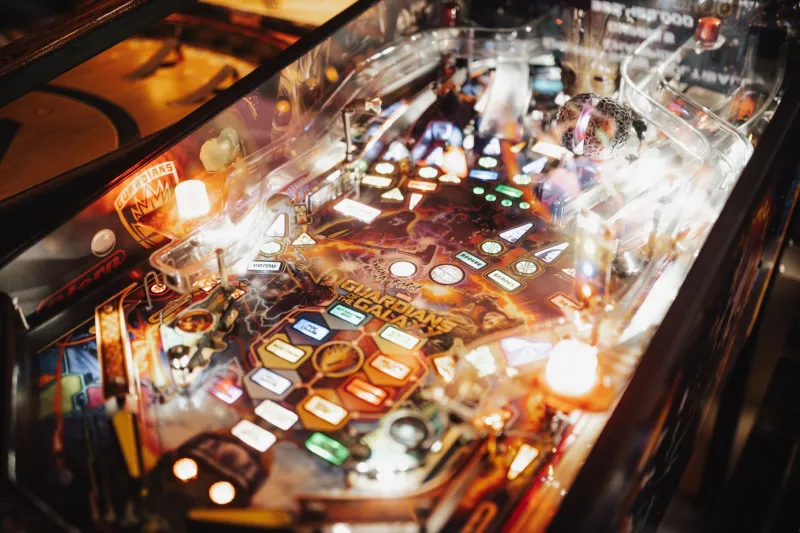
Walk into the right bar in Chicago, Portland, or Austin on a Tuesday night and you might stumble onto something that looks like a casual game of pinball. Look closer, though, and you'll notice the scoresheets, the hushed intensity, and the players studying machine layouts like chess grandmasters reading a board. This isn't nostalgia. This is competition.
Pinball has quietly transformed from a quarter-munching relic of roller rinks and pizza parlors into one of America's most surprising underground sports. And the people driving that transformation are dead serious about it.
The Skill Ceiling Nobody Talks About
Ask a casual observer what pinball requires and they'll probably say "good reflexes" or "luck." Ask a ranked competitive player the same question and you'll get a fifteen-minute breakdown covering shot sequencing, ball control techniques, multiball management, risk-reward decision trees, and machine-specific rule sets that can take months to fully internalize.
Modern pinball machines — especially titles from manufacturers like Stern and Jersey Jack Pinball — are essentially interactive rulebooks disguised as arcade games. Top players aren't just reacting to a bouncing ball. They're executing deliberate strategies, choosing which modes to stack, and making split-second decisions that can mean the difference between a 10-million-point game and a 500-million-point one.
"People see pinball and think it's random," says one mid-level tournament regular from the Midwest competitive circuit. "But the best players are controlling that ball. They're doing post passes, drop catches, live catches. It's a physical skill set that takes years to develop."
That skill ceiling is part of what has fueled the competitive scene's growth. There's always another technique to master, another machine to learn, another player to study.
Brackets, Rankings, and Real Prize Money
The International Flipper Pinball Association — better known as the IFPA — has been quietly building the infrastructure of a legitimate sport for years. With thousands of sanctioned events across the country and a world ranking system that tracks player performance across tournaments, the IFPA has given competitive pinball the organizational backbone it needed to be taken seriously.
Tournaments range from small local events held in arcade bars and game rooms to major national competitions drawing hundreds of competitors. The Pinball Expo in Chicago and the Texas Pinball Festival are among the bigger stops on the circuit, and prize pools at elite events can run into thousands of dollars. Not life-changing money for most players, but enough to validate the pursuit as something more than a hobby.
The format varies by event. Some use a head-to-head match play system where players face off directly on specific machines. Others use a combined score format across multiple titles. Either way, the competitive structure mirrors what you'd find in any legitimate sport — seeding, brackets, upsets, and champions.
The Machines Are Trying to Beat You
Here's something casual players don't realize: modern pinball machines are actively designed to challenge you. Not just through physical difficulty, but through layered rule systems that punish passive play and reward aggression. Some machines feature what players call "wizard modes" — end-game sequences so demanding that completing them in a tournament setting is considered a genuine achievement.
And then there's the hardware itself. Today's machines are packed with digital displays, complex mechanical toys, and software that tracks player behavior in real time. Some venues run machines on tournament settings, which can tighten up ball physics and reduce the margin for error. The game is, quite literally, calibrated to humble you.
Vintage machine collectors and restorers play a different but equally passionate role in this world. Older electromechanical machines from the 1970s and early 1980s have a devoted preservation community dedicated to sourcing parts, rebuilding components, and maintaining the physical history of the medium. For these enthusiasts, a perfectly restored Williams or Bally machine from 1978 is a piece of American cultural heritage worth protecting.
Streaming, Sponsorships, and the Push for Legitimacy
Like almost every niche competitive scene in the past decade, pinball has found a second wind through streaming. Channels dedicated to pinball gameplay, tournament coverage, and machine deep-dives have built surprisingly loyal audiences on YouTube and Twitch. Watching a skilled player tear through a high-stakes tournament game — complete with live commentary breaking down strategy — turns out to be genuinely compelling content.
That visibility has opened doors. Equipment manufacturers have taken notice, and some top-ranked players have secured sponsorship arrangements that help offset the very real costs of competitive play — travel, entry fees, and the occasional personal machine purchase for practice purposes. It's not NBA money, but the fact that sponsorships exist at all signals a shift in how the broader world perceives the game.
Content creators in the space are also doing the important work of demystifying pinball for newcomers. Tutorial videos breaking down how to approach specific machines, strategy guides for major tournaments, and behind-the-scenes looks at the competitive lifestyle are pulling in audiences who might never have considered pinball a sport worth following.
The Community Is the Point
For all the competitive fire, what strikes most people when they first encounter the pinball community is how genuinely welcoming it is. Local leagues run by bars and arcade venues tend to operate with a "serious but not cutthroat" mentality. Experienced players routinely take time to coach newcomers. Machine knowledge gets shared freely. The culture skews collaborative even when the scoreboards don't.
That communal warmth is part of what keeps people coming back. Yes, the competition matters. Yes, players want to climb the IFPA rankings and cash a tournament check. But the Tuesday night league at your local barcade, the road trip to a regional tournament with three friends crammed in a Honda Civic, the late-night conversation about the optimal strategy for a particular machine — that's the real texture of the scene.
Pinball never really died. It just went underground, found its people, and started building something worth watching. The silver ball is very much alive — and it's got a bracket to prove it.