Secret Seeds and Midnight Fences: The Quiet War Over Giant Pumpkins
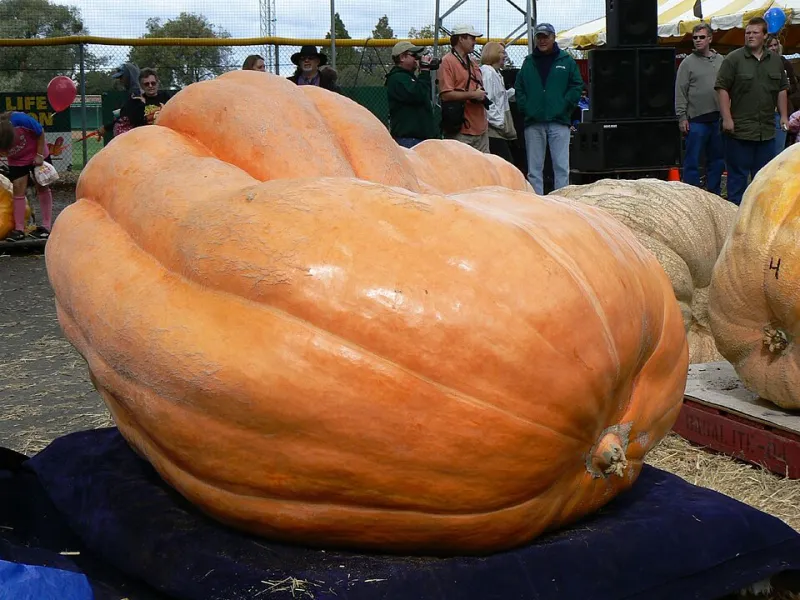
Photo: Nick Ares, CC BY-SA 2.0, via Wikimedia Commons
Somewhere in rural Ohio right now, a man is standing in his patch at midnight, checking a fence line. He's not protecting against deer. He's protecting against people — specifically, anyone who might come for the genetics growing inside his pumpkin.
This is competitive giant pumpkin growing, and it is far stranger, more scientific, and more cutthroat than the county fair ever let on.
The Numbers Game
The current world record sits north of 2,700 pounds — a pumpkin heavier than a grand piano. To get there, growers run their patches like laboratories: soil tests sent off monthly, foliar feeding schedules taped to the garage fridge, mycorrhizal fungi inoculants, and drip irrigation calibrated to the ounce. A single vine might be pruned down to one fruit so every calorie the plant produces funnels into a single, bloated orange moon.
The fruit itself grows absurdly fast at peak season — 40 to 50 pounds per day is not unusual. Growers talk about their pumpkins the way new parents talk about babies: daily weight measurements, growth charts, and genuine heartbreak when something goes wrong.
The Seed Economy
Here's where it gets wild: the real currency isn't pumpkins. It's seeds. Prize genetics descend from famous record-holding lineages, and a single seed from a champion fruit can trade for hundreds of dollars in the tight-knit grower community. Seeds get auctioned, gifted, traded, and — in the ugliest cases — stolen.
'Seed poaching' is the scandal that haunts every serious patch. Growers tell stories of trespassers caught at dawn, of pumpkins slashed out of spite, of a champion fruit's genetics being swiped before weigh-off day. Hence the midnight fences, trail cameras, and the informal code of secrecy around whose lineages are planted where.
Weigh-Off Day
All of it — the soil chemistry, the paranoia, the 4 a.m. watering runs — funnels into a handful of autumn spectacles. Events like the Safeway World Championship Pumpkin Weigh-Off in Half Moon Bay, California, draw growers from across the country, each hauling their gourd on a custom-built pallet with the care of an art handler moving a Picasso.
The scale is certified. The crowd gasps at the numbers. And when the winner is announced, there's no million-dollar check — often just a jacket, a trophy, and the intangible crown of knowing you grew the heaviest thing anyone in the room has ever seen. The real prize is the genetics, and the bragging rights that come with next spring's seed demand.
Why They Do It
Ask growers why they pour thousands of dollars and an entire growing season into a vegetable nobody eats, and the answers circle back to the same themes: it's gardening with a scoreboard. It's a puzzle with living pieces. And unlike most competitive hobbies, your rival's failure doesn't help you — you're all racing against biology itself.
As the weigh-off season wraps and the frost takes the vines, the community shifts into its off-season mode: seed trades, soil amendments, and scheming. Because in giant pumpkin growing, the competition never really ends. It just goes dormant until the ground thaws — and the race toward 2,500, then 3,000 pounds, begins again.